 Arlington Restoration Group
Water Damage Restoration Along Columbia Pike
Two Building Eras Along the Pike
Columbia Pike runs roughly 3.5 miles through South Arlington, and the buildings along it tell two different stories. Older sections are lined with mid-century garden apartment complexes built in the postwar decades, while newer stretches near Pentagon City and the eastern end of the corridor have filled in with contemporary infill condos, townhomes and mixed-use buildings.
That mix matters when water damage strikes, because a leak in a 1950s garden apartment behaves very differently than a leak in a new construction mid-rise, and the right response depends on knowing which kind of building you're dealing with.
How a Leak Behaves by Building Type
In the older garden apartment stock, the most common calls involve a leak on one floor showing up as a stain or sag on the ceiling below — a failed supply line, an overflowing tub, or a washing machine hose letting go in a unit upstairs. Aging galvanized supply lines and older drain configurations, common throughout Arlington's mid-century housing, are frequently part of the picture, and multiple units in the same building can be affected by a single failure.
In the newer infill buildings, plumbing is generally modern PEX or copper, but density still means a burst line or a failed appliance connection can travel through shared walls, floors and utility chases before anyone notices.
Emergency Response and What Crews Do
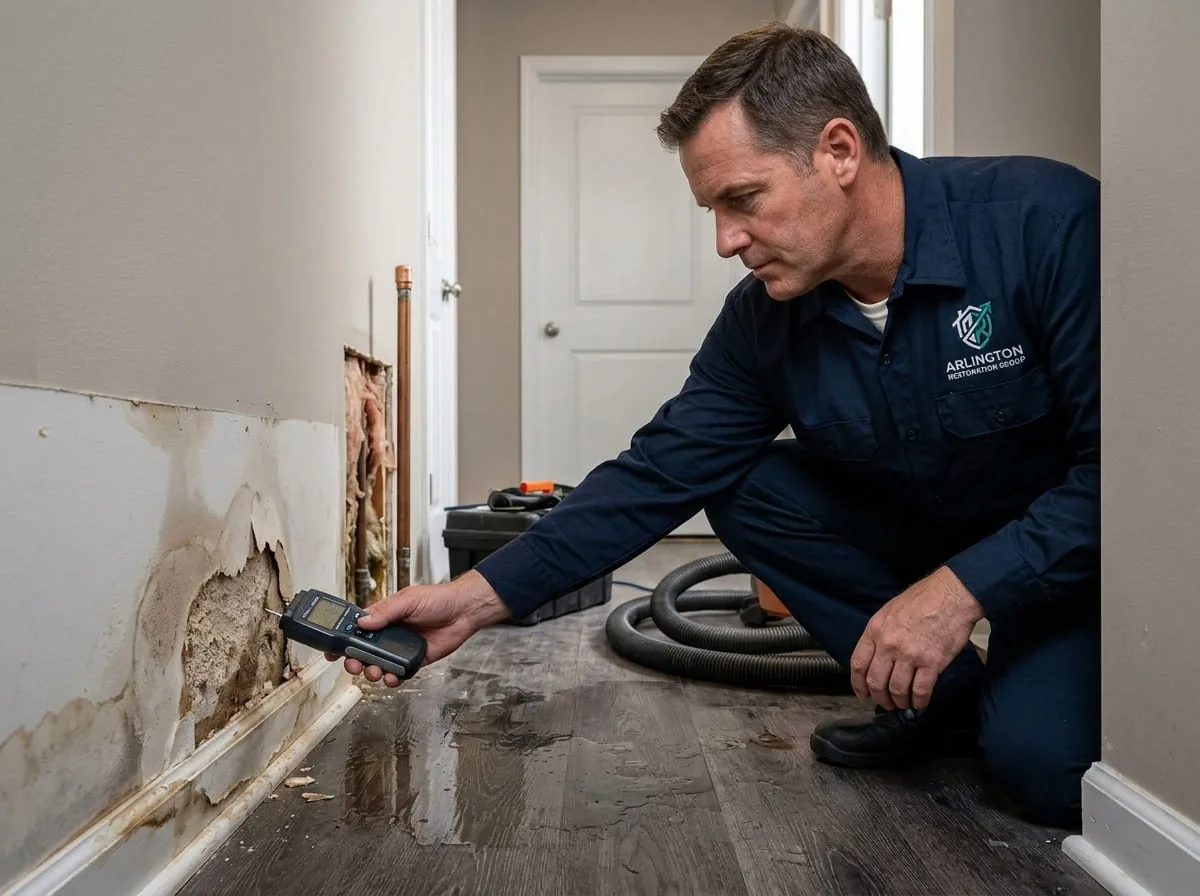
Emergency response is dispatched to emergency water damage restoration calls throughout the corridor around the clock. Technicians extract standing water first, then take moisture readings from ceilings, walls and flooring to map exactly how far the water traveled before deciding what needs to be dried in place versus removed.
Ceiling and wall water damage from an upstairs unit is one of the most frequent scenarios on Columbia Pike, and appliance leaks from dishwashers, washing machines and water heaters in older kitchen and utility layouts are close behind.
Ground-Floor Retail and Commercial Space
The corridor's ground-floor retail and small commercial spaces — restaurants, groceries, salons and service businesses — also see their share of calls. Commercial water damage restoration follows the same extraction and drying process, adapted to a business's operating hours and the type of equipment or stock on site, so a restaurant kitchen and a retail storefront aren't treated identically.
Insurance and Documentation for Renters and Landlords
Renters make up a large share of Columbia Pike's population, and a water damage call often involves more than one party — a renter's contents, a landlord's structure, and in newer condo buildings a master policy covering shared systems. Documentation matters in these situations, and crews take photos and moisture readings as they work so there's a clear record for whichever policy ends up covering the loss.
Older buildings with plaster walls and masonry construction can also take longer to dry than newer drywall construction, even after standing water is fully extracted, so monitoring continues over several days rather than stopping once the surface looks dry.
- Ceiling stains or sagging drywall below an upstairs unit
- Water heater or washing machine hose failures in older utility closets
- Slow leaks behind kitchen and bathroom cabinetry in garden apartments
- Storm-driven water intrusion around flat roofs and parking structures in newer buildings
Fire Damage Along Columbia Pike
Kitchen fires and electrical fires are the most common fire-related calls in dense apartment and retail buildings along the corridor, and a fire in one unit often means smoke odor and soot travel further than the fire itself, into hallways and adjacent units. Fire damage restoration covers everything from emergency board-up to smoke odor removal and full reconstruction, coordinated with property managers and landlords as needed so residents and business owners aren't left guessing about next steps.
Mold Risk in Columbia Pike Apartments
Older garden apartment buildings can hold moisture inside walls and under flooring longer than the exterior appears, especially after a ceiling leak isn't fully dried before it's patched over cosmetically. Mold remediation services include inspection, testing, and containment-based removal, handled directly with tenants or property management as the building and lease situation requires.
What to Expect When You Call
A typical Columbia Pike call starts with a report of a ceiling stain, a wet carpet, or water coming through a shared wall. Dispatch routes the call to a licensed, insured restoration crew working in the area, who assess which units are affected, extract standing water, and set up air movers and dehumidifiers to dry the structure over the following days.
In multi-unit buildings, crews coordinate with property managers to access adjoining units when a leak has traveled between floors, which is common in older garden apartment construction. Insurance claim assistance is available throughout the process, whether the claim is filed by a homeowner, a renter's policy, or a building's master policy.
Nearby Service Areas
Crews responding to Columbia Pike also cover the surrounding South Arlington neighborhoods, many of which share the same mix of mid-century garden apartments and newer infill construction:
- Shirlington & Fairlington — the historic garden-apartment community and village center just south of the Pike
- Green Valley (Nauck) — a residential neighborhood bordering the corridor's western end
- Arlington Ridge & Aurora Highlands — hillside single-family neighborhoods toward Crystal City
Frequently Asked Questions
Do you handle water damage in Columbia Pike apartment buildings?
Yes. Calls from garden apartment complexes, condos and newer mixed-use buildings along Columbia Pike are routed to licensed restoration crews experienced with multi-unit water damage, including leaks that travel between floors or units.
My upstairs neighbor's leak damaged my ceiling — who handles that?
The restoration crew dispatched to the call will assess the source of the leak and the extent of damage in your unit, and can coordinate with a property manager or landlord when access to the unit above is needed.
Is emergency water damage response available 24/7 on Columbia Pike?
Yes, emergency dispatch covers the Columbia Pike corridor around the clock, including nights, weekends and holidays.
Do you work with commercial tenants and small businesses along the Pike?
Yes. Restaurants, retail spaces and other ground-floor businesses along Columbia Pike receive the same extraction and drying response as residential units, scheduled around business hours where possible.
Are there mold risks specific to older Columbia Pike buildings?
Mid-century garden apartment construction can trap moisture behind walls and under flooring after a leak, so buildings of that era are inspected carefully during drying to catch conditions that could lead to mold if left untreated.